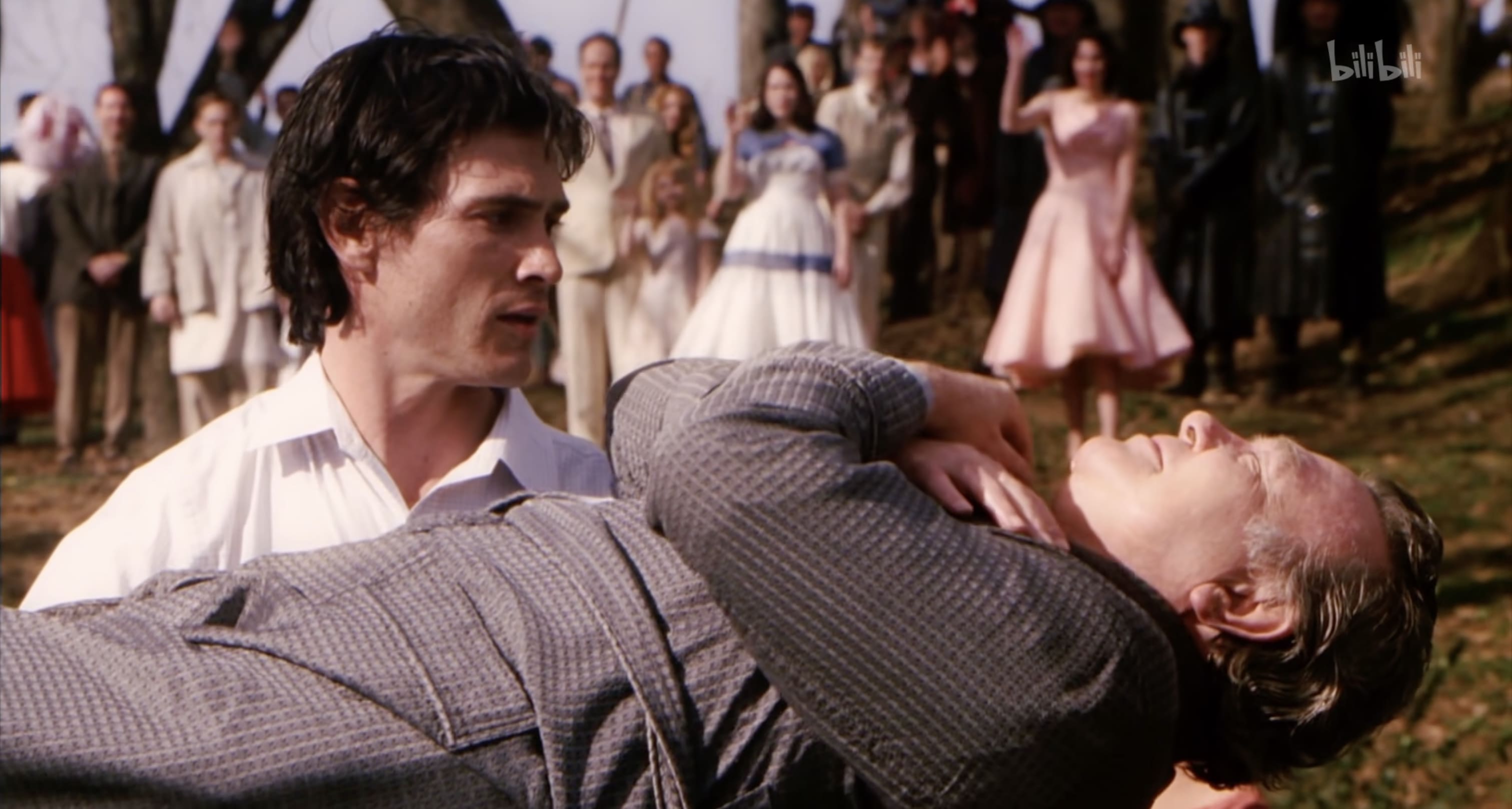
"And I suppose if I had to choose between the true version and an elaborate one involving a fish and a wedding ring, I might choose the fancy version."
Someday, I hope I will write a novel, or draw an illustrated collection, or simply weave them together into a travelogue called Yo-Yo's Wanderings. With no particular purpose in mind—I just want to do it, do it happily, and do it freely.
Of course, if there's a selfish motive, it's this: I've always wanted my own Fancy Version. Every time a film or a melody moves me to tears or laughter, I can't help thinking, enviously, "How wonderful and satisfying it would be to claim such a work as my own."
Of course, I also know myself well enough. The True Version of Yo-Yo's Wanderings is a boy becoming a teenager, becoming a young man, becoming a middle-aged uncle, becoming an old man—it is his small heroic dream within an ordinary life, one that takes nothing but paper and pen to fulfill. But I would say: a boy is forever a boy, innocent even after becoming a knight. He duels that distant windmill gate, and the story's true beginning is when this little knight breaks his wooden sword and hears that, beside the noisiest strait in the world, on the equator where the clouds shift in a thousand shapes, stands the smallest and most advanced city-state, where the Sword of the Brave he seeks awaits him. And so…
Am I really going to drone on—about how I applied to study abroad, how I crammed for the IELTS, and how, after all that huffing and puffing, I finally became a programmer-in-training? That version will probably only make a brief appearance when younger students want to follow the same path. Necessary realism, I suppose.
I used to cling stubbornly to realism, wanting to know what was truly true and what was a lie, wanting to confirm which things meant love and which meant hate; I understood a person through their experiences, not their stories. As a child I was clumsy with words—unable to speak, only to listen—so my mother would tell me about her life by my pillow, and the passersby left their own stories in my ears. Later, when I wanted to speak, the counselor encouraged me to voice my True Version, and suddenly I found it so dull, so hollow, so heavy.
Shuyu, you said that when you look at your own pain, there is an irritated kind of indifference, and that your emotions sometimes feel very far away. I think I understand. Countless times, in the moments when I should have wept, in the moments when I should have laughed, in the moments when I should have spoken, in the moments when I should have poured everything out—it was as if I had been flung into the vacuum of the Moon, gazing from afar at a small blue planet. Why? Is some part of me broken?
Because, Mama, what I wanted to hear was a bedtime story.
And so, Old Daddy became a Big Fish. The prickly little troubles of his life became spiderwebs at the crossroads of a ghost town; his first job, toilsome and ill-fated, became a joke in the werewolf circus; his most arduous, perilous ordeal became the road home from Vietnam to America. The story's focus forever rests on wonder, not on regret, sorrow, or pain—it is a father's choice, after journeying through every warmth and coldness of the world, to return to innocence and love.
Stories are not lies, and certainly not falsehoods. Here, at least, a story is itself the best answer—the best answer a boy, or a knight, or a father can reap and give after endlessly demanding "why" and "what should I do" from reality.
The True Version I spoke of on October 4th was me saying, I want to face you sincerely—beyond that, it is merely something that once happened. I had long since done my part; it has long since stopped belonging to the present. Realism, after all, only needs to be good enough. But in Yo-Yo's Wanderings, this is how I will write it: The little knight has not yet managed to draw the Sword of the Brave, but an old fisherman in a bucket hat, guitar in hand, teaches him the magic of night flight, bidding him ride the melody in his heart to the summer nights of a great metropolis—a day when even the wind tasted sweet and tart like strawberries. Fresh from a harrowing landing, he meets her in a moment of delightful surprise: a wonderful girl he is destined to love. At the end of that summer, they fall in love through six magnificent days, and after the seventh year they long for each other—the longing piling thick letters upon the table, recording their springs, summers, autumns, and winters, until, after three turns of the seasons, once the little knight has forged a sword of his own, in yet another summer he reaches the one he loves deeply, and the two of them come to have a stereo, a black cat, rattan chairs…
The story has always been simple and full of surprises, quietly explaining all of reality.
Face reality well, and savor the story well—the days are long, yet the years slip by like a flash…